
How to reconnect with an old friend, without pressure
Learn how to reconnect with an old friend using a short text, a quiet catch-up plan, and respectful next steps if they decline or don't reply.
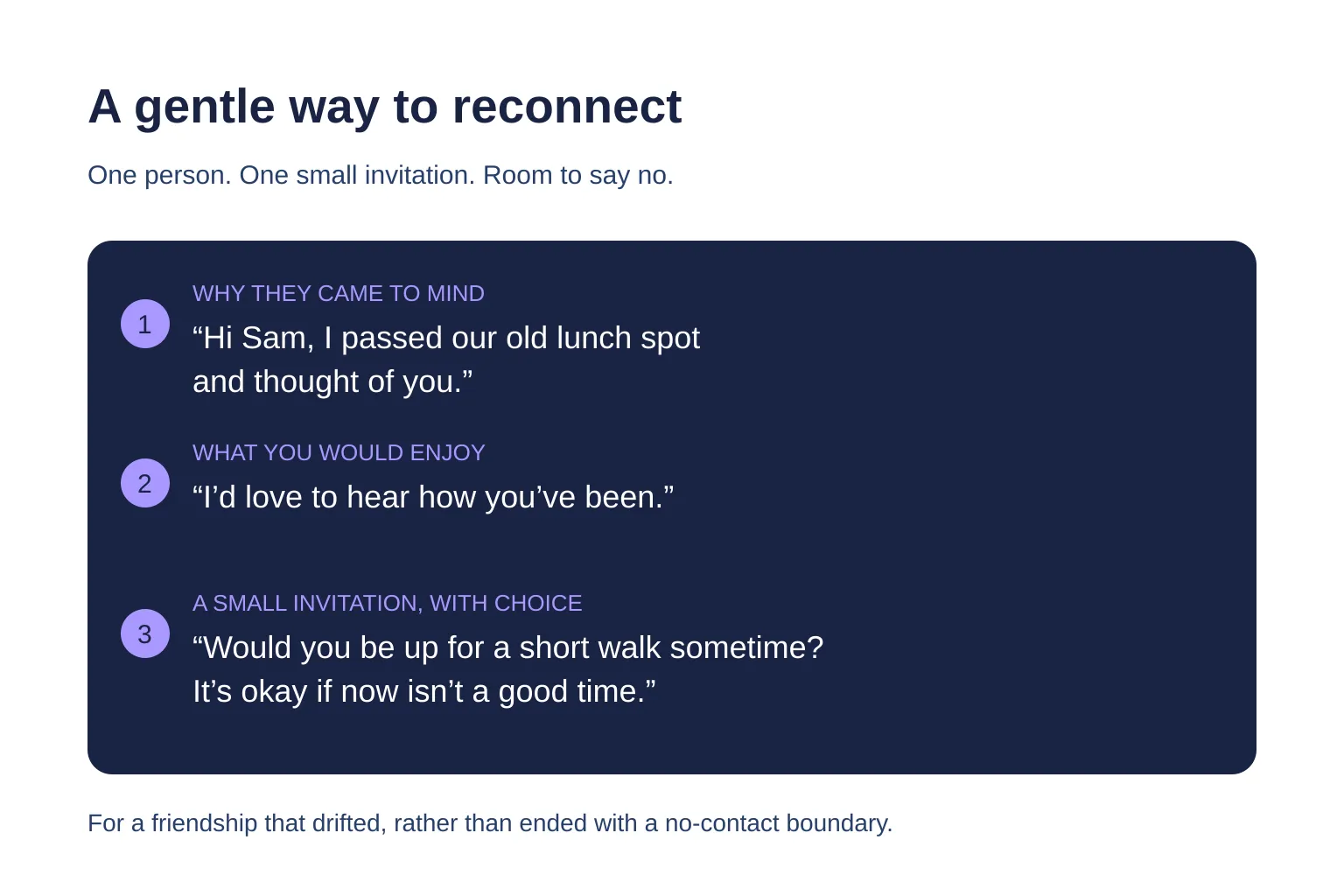
Missing someone and knowing how to reach out are different things. To reconnect with an old friend, send a short, personal message that says why they came to mind and offers one easy way to catch up. Leave them room to decline or take their time; if they have asked for no contact, respect that boundary.
How to reconnect with an old friend by text
For a friendship that simply drifted, a useful first text has three parts: a genuine reason you thought of them, a wish to catch up, and a small invitation. You don't need to explain every month of silence or ask them to restore the whole friendship in one reply.
Say you and Sam used to have lunch together, but work changes meant you stopped seeing each other. You haven't spoken for a year. You could write:
“Hi Sam, I passed our old lunch spot and thought of you. I'd love to hear how you've been. Would you be up for a short walk sometime? It's okay if now isn't a good time.”
Change the memory and activity to something true for you. If meeting feels like too much, replace the last two sentences with: “Would you feel like catching up here by text?” One invitation is enough; a menu of coffee, dinner, calls and weekends gives them more to decide.
Avoid opening with “You never message me anymore” or “I guess you've forgotten about me.” Those phrases ask the other person to defend themselves before you've had a chance to reconnect.
Check whether this is distance, hurt, or a boundary
The right opening depends on how contact ended. Before sending a cheerful memory, consider which situation fits:
| What happened | A considerate next step |
|---|---|
| Life got busy and neither of you kept in touch | Send a warm, brief invitation. Acknowledge the gap if that sounds natural. |
| You left a message unanswered | Name it simply: “I'm sorry I left your last message unanswered.” Then say you'd welcome catching up. |
| You hurt them or there was unresolved conflict | Acknowledge the specific action and its impact rather than skipping straight to a social plan. Don't ask for immediate forgiveness. |
| They asked you not to contact them, or blocked you | Don't send the message or use another account, platform or mutual friend to get around the boundary. |
| Contact felt unsafe or repeatedly harmful to you | You can choose not to reopen it, even if you also miss parts of the friendship. |
For example, if you cancelled an important visit and never acknowledged it, “I miss our good times” leaves something out. A more accountable opening could be: “I'm sorry I cancelled your birthday visit and didn't follow up. I understand that was hurtful. If you'd ever like to talk, I'm open to listening.”
An apology doesn't create an obligation to reply. You can take responsibility without making renewed friendship the price of accepting it.
If they say yes, make the catch-up small and specific
Once your friend shows interest, suggest a time and a format that actually fit your life. “Would Sunday at 3 work for a 20-minute walk in the park?” is easier to answer than “We should definitely do something soon.” The 20 minutes is a proposed plan, not a rule about how long connection should last.
Quiet connection counts. You can choose:
- A short phone call if you live far apart.
- A walk or bench-side chat if you prefer being outdoors.
- A few messages exchanged when each of you has time, without arranging a meeting.
Choose a mutually comfortable, accessible setting. You don't have to host a dinner, attend a crowded event or become more outgoing to spend meaningful time with someone.
For the walk with Sam, you might start with: “What's an ordinary week like for you now?” Share a little of your own week too. Let the conversation include who you both are today, rather than checking whether it feels exactly like it did a year ago.
If you enjoy the visit, a next invitation can be equally modest: “I enjoyed this. Would you like to do another walk next month?” You can also leave it at one pleasant catch-up.
What if your old friend doesn't reply?
No reply means you don't have an answer about reconnecting. It doesn't tell you whether they are busy, unsure, uninterested or dealing with something you know nothing about. Avoid turning the silence into a definite story about either of you.
You can leave the invitation where it is. If you choose to follow up, let some time pass and send one brief note rather than repeated nudges: “Just leaving this here in case it got buried. I'd still enjoy catching up if you'd like to.” Then stop pursuing a response unless they engage.
If they decline, accept the answer. “Thanks for letting me know. Wishing you well” is enough. Don't turn “no pressure” into a negotiation by asking them to justify their decision.
You can write the message without sending it today
Drafting is a valid stopping point. If you're unsure about this particular friendship, leave the message in a private note and ask: “Do I want contact with this person as they are now, or am I mostly missing that time in my life?” You may decide to reach out, wait, or leave the friendship in the past.
If you're unsure what kind of connection you want more broadly, How do you figure out what you want in life? can help you separate the experience you're missing from the change you first imagined.
For now, write one short message in your own words. You can decide whether to send it after you've read it back.